Cetinje to Budva Drive: The Old Riviera Road in 2026
There’s the fast way from Cetinje to Budva — the new coastal road, 28 kilometres in 35 minutes — and then there’s the old way. The old way takes 55 minutes to an hour and passes through Lovćen National Park, over a 945-metre mountain pass, past a medieval island monastery, and along a section of Riviera coastline that the package tourists haven’t found yet. If you have a hire car and a morning to fill, this is the route to take.
Why Take the Old Riviera Road?
Cetinje is Montenegro’s royal capital — the city where the Petrović dynasty ruled for almost a century, where the royal palace still stands on a hillside overlooking the town, and where the national museum holds artefacts that predate the country’s independence by 500 years. It sits at 640 metres above sea level, hemmed in by the Lovćen mountains. For centuries, the only way to reach the coast was the old R-1 road that dropped steeply from the mountain plateau to the sea.
That road is still there. And it’s one of the most spectacular short drives in the Balkans.
Stage 1: Cetinje to the Lovćen Pass
Leave Cetinje heading south on the R-1. The road immediately begins to climb through a landscape of dry stone walls, old beech forest, and open meadow. The air changes — cooler, carrying the smell of pine and mountain herbs. About 8 kilometres out of Cetinje, the road reaches the Njeguši saddle, the lowest point in the Lovćen ridge at 945 metres.
Stop here. From the small layby on the right (coming from Cetinje), you get a 180-degree panorama: on a clear day, you can see the Bay of Kotor on one side and the Lake Skadar basin on the other. The Lovćen peaks rise behind you. This is the geographic heart of Montenegro in miniature.
Local tip: Njeguši village, just below the pass, is famous for its air-cured ham (njeguški pršut) and cheese. There’s a small roadside stand at the top of the village — look for the hand-painted sign. Buy some pršut to eat later with bread at your Budva hotel. It keeps without refrigeration for hours.
Stage 2: The Descent — Lovćen to the Coast
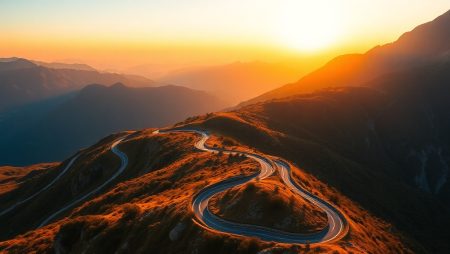
From the pass, the R-1 descends steeply through a series of tight switchbacks — nine named bends that drop nearly 800 metres in altitude over about 6 kilometres. The road is in reasonable condition but narrow. Take it slowly; the corners are blind and you’ll encounter farm vehicles. This is the road’s most demanding section.
As you drop below 400 metres, the landscape shifts from mountain to Mediterranean: fig trees, cypress, oleander. The village of Brajići appears on your left — a small settlement with a remarkable little church, Crkva Sv. Arhanđela, sitting alone on a promontory above the road. It’s one of the most photographed small churches in the Balkans, though you won’t find it in most guidebooks.
Continue past Brajići for another 5 kilometres and the road levels out as it approaches the coast near the village of Reževići. From here, you have a choice: turn right toward the main coast road (M-2.3) and head directly to Budva in 10 minutes, or continue straight on the smaller local road along the quieter eastern shore.
Stage 3: The Quiet Riviera — Reževići to Budva
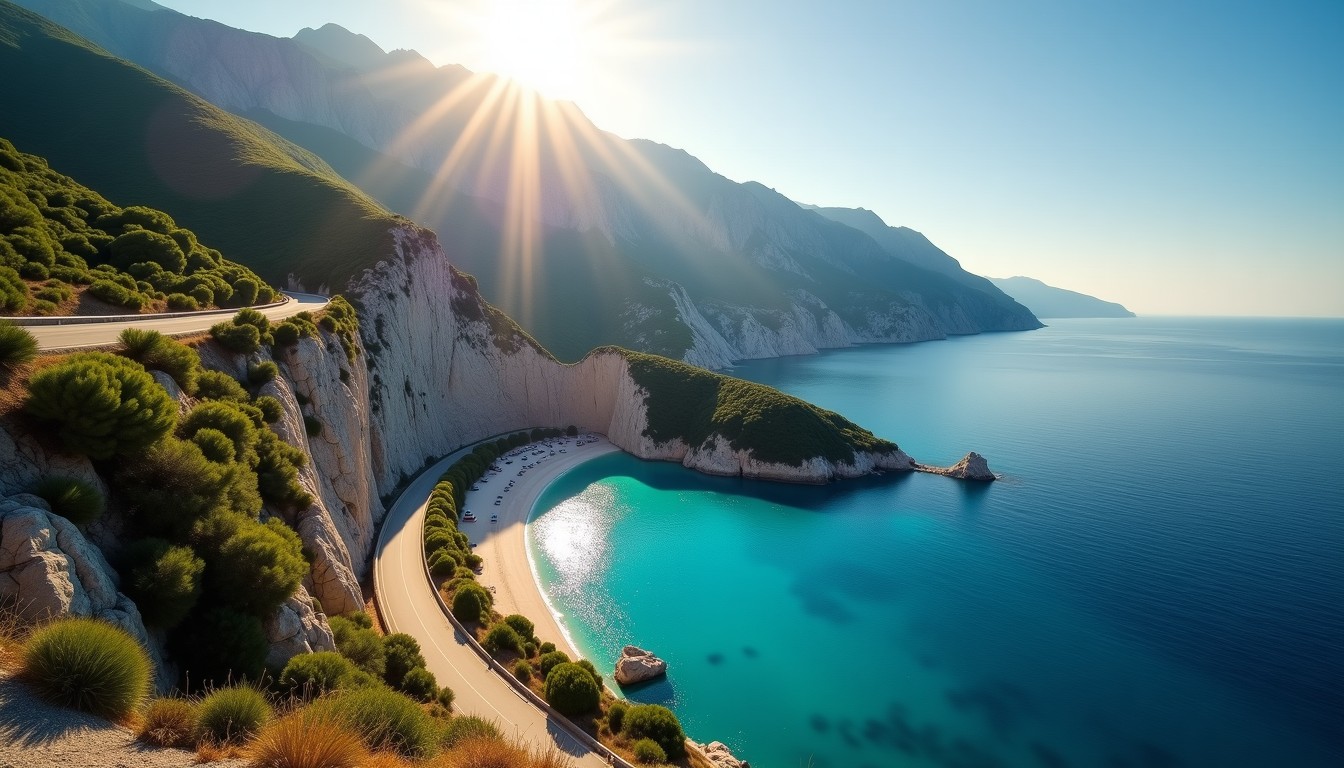
The coastal road from Reževići to Budva is the stretch that locals know and tourists rarely find. It runs through a sequence of small, undeveloped coves — Drobniški,滨江, Žukovica — where the Adriatic is at its clearest and there’s rarely more than a handful of cars parked at the roadside.
This section is about 12 kilometres and takes 20–25 minutes with stops. The road is narrow in places and some sections have rough patches — nothing that requires a 4×4, but a compact SUV gives you confidence on the hairpins near Krimovica.
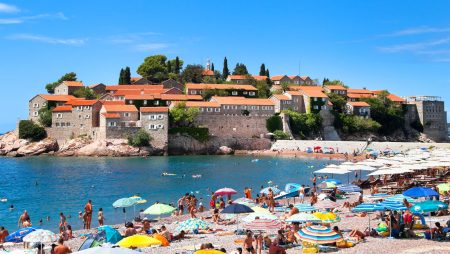
About halfway along, near the village of Blizikuće, you pass above Sveti Stefan — the famous island hotel that was once a fishing village. The view from the road is one of the best in Montenegro: the pink-roofed island connected to the mainland by a narrow causeway, the Adriatic blue in every direction. Stop in the layby before the descent to Budva for photos.
Stop: Petrovac — The Halfway Coastal Town
If you want a reason to stop, Petrovac is 8 kilometres before Budva. It’s a small resort town — really just a long seafront promenade with a beach, a handful of cafés, and two islands offshore. The larger island, St. Georgi, has a 15th-century Benedictine monastery you can visit by boat (€5 return, ask at the harbour). The smaller island, Kados, is a sunbathing spot only.
Petrovac’s beach is sandy — rare on the Budva Riviera — and significantly less crowded than Budva’s main town beach. In July and August it fills up, but in May, June, and September it’s close to empty by midday.
Arriving in Budva
The road descends into Budva from the east, passing through the resort area of Rafailovići and beyond — massive hotel complexes, beach bars, the works. It can feel like a shock after the solitude of the Lovćen pass. But you’ve arrived by the interesting route, with a head full of mountain passes and monastery islands and coves that the cruise ship day-trippers never see.
Parking in Budva Old Town is extremely limited and expensive in summer (€2–3 per hour in high season). Use the public car park at the Marina (follow signs from the main coastal road) — it’s undercover, secure, and a five-minute walk to the old town gate.
Practical Information
Road conditions: The R-1 from Cetinje to the coast is in fair-to-good condition. The mountain pass switchbacks are narrow with limited overtaking opportunities. The coastal section Reževići–Budva has some rough patches and is single-lane in places.
Tolls: None on the old Riviera route. The new Cetinje–Budva motorway (which this route avoids) is also toll-free.
Drive time: 55 minutes to 1 hour 15 minutes without stops. Allow 2–2.5 hours if you plan to stop at the Lovćen pass viewpoint, Brajići church, and Petrovac.
Best season: May through October. The Lovćen pass section can be icy in winter (November through March) — check conditions if driving in early spring or late autumn.
Car hire tip: A compact SUV is ideal for this route. The Lovćen switchbacks are steep but manageable in any car with functioning brakes. Avoid large 4x4s on the narrow mountain section — you’ll struggle to pass oncoming traffic on the tight bends.
Summary
The Cetinje to Budva drive via the old Riviera road is Montenegro in miniature: mountain pass, medieval villages, cliff-side coastal views, and a completely different pace of travel to the coastal motorway. It takes an hour to 90 minutes without stops, covers about 35 kilometres, and delivers more visual variety than almost any other short drive in the country. The njeguški pršut bought at the pass is non-negotiable — eat it that evening with local cheese and bread and you’ll understand exactly why people drive this route specifically.
Ready to book? Visit our homepage for the best hire car deals.