Discover the Must-See Destinations in Montenegro: A Car Rental Guide
There’s a particular moment that happens on nearly every road in Montenegro. You’re driving along, the landscape is already impressive, and then you round a bend and the view opens up in a way that makes you involuntarily say something out loud. It might be the Bay of Kotor from the serpentine. The Tara Canyon from the Durmitor road. Lake Skadar at sunset with the Accursed Mountains behind it. Ostrog Monastery appearing out of a cliff face. This country doesn’t do subtle.
Montenegro is 13,812 square kilometers — about the size of Northern Ireland or Connecticut — and within that compact footprint you get five national parks, 293 km of Adriatic coastline, the deepest canyon in Europe, a UNESCO-listed bay, and enough Orthodox monasteries carved into improbable cliff faces to fill a coffee table book. You cannot see all of it by bus. You need a rental car in Montenegro. Here’s the definitive guide to the destinations worth driving to.
1. The Bay of Kotor — The Full Loop, Not Just the Old Town
The Bay of Kotor (Boka Kotorska) is the headline attraction and it earns it. But most visitors experience about 15% of it — Kotor Old Town, maybe Perast, then back on the tour bus or into a taxi. With a rent a car Kotor, you do the whole bay at your own pace.
The complete loop runs about 40 km: Kotor → Perast (baroque waterfront, boat to Our Lady of the Rocks island, €5 round trip) → Risan (2nd-century Roman mosaics, €3) → Herceg Novi (fortress town, Savina Monastery from 1030) → Verige ferry (€4.50, cross the narrows) → Lepetane → Tivat → Prčanj → back to Kotor.
At Prčanj, pull over and walk the stone waterfront. This village has four baroque palaces and a church with a painting attributed to Veronese, and you’ll likely have the promenade to yourself while Kotor’s Old Town is gridlocked 15 minutes away. The bay rewards drivers who stop when something looks interesting rather than following a checklist.
2. Lovćen National Park and the Serpentine Road
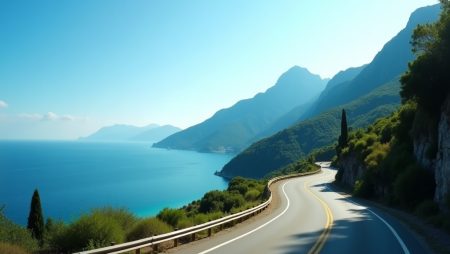
The drive up Lovćen from Kotor is the most talked-about road in Montenegro for good reason. Twenty-five numbered hairpin turns — the Kotor Serpentine, built by Austro-Hungarian engineers in 1879 — lift you from sea level to 1,200 meters in under an hour. Every switchback adds altitude and the view compounds. At turn 22 there’s a pull-off where the entire bay appears below you.
At the summit, Njegoš’s Mausoleum sits at 1,660 meters. Petar II Petrović Njegoš was a prince-bishop, philosopher, and Montenegro’s national poet. The mausoleum — designed by Ivan Meštrović, Yugoslavia’s greatest sculptor — is a granite monument with two giant caryatids flanking the entrance. Inside, a 28-tonne statue of Njegoš with an eagle. Behind it, a circular observation platform: 360 degrees of mountains, the coast a sliver of blue, and on clear days, Italy.
From Lovćen, drive down to Cetinje — the royal capital from 1482 to 1946. The monastery, King Nikola’s Palace, the billiard hall (Biljarda), and the former embassies of European powers (now museums) all sit along a tree-lined boulevard. Cetinje feels like a town that time moved past, which is exactly its appeal.
3. Lake Skadar — Europe’s Largest Bird Reserve
Lake Skadar straddles Montenegro and Albania. The Montenegrin side is a national park and one of Europe’s most important bird habitats — 280 species, including the rare Dalmatian pelican. The best access point is Virpazar, 25 km south of Podgorica, easily reached with a car hire Podgorica.
From Virpazar: boat trips into the lake (€15–20/hour), the old prison island of Grmožur, smoked carp and Vranac wine at a waterfront konoba. For a more solitary experience, drive the road south from Virpazar toward Godinje and the Albanian border. The lake opens up on your left, the mountains rise on your right, and family wineries appear every few kilometers. The Crmnica wine region produces some of Montenegro’s best Vranac and Krstač. Stop anywhere with a hand-painted “VINO” sign.
Another entry point is Rijeka Crnojevića, a village on a river bend 30 minutes west of Podgorica. It’s smaller than Virpazar, less developed, with a famous stone bridge and a restaurant (Stari Most) on the water. The road in follows the river through a narrow canyon — one of the prettiest drives near the capital.
4. Durmitor National Park and the Tara Canyon
Durmitor is Montenegro’s mountain crown. A UNESCO World Heritage site, it holds 48 peaks above 2,000 meters, 18 glacial lakes, and the Tara River Canyon — at 1,300 meters deep, the deepest canyon in Europe. It’s also where the temperature drops by 10°C compared to the coast, which in July and August is its own attraction.
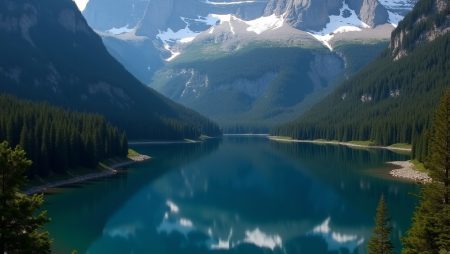
The base town is Žabljak (altitude 1,456 meters). It’s a ski center in winter, hiking hub in summer. From Žabljak: Black Lake is a 3.6 km loop trail around two glacial lakes connected by a narrow channel. It’s the easy walk — flat, well-marked, pine forest, mountain reflections in the water. More ambitious: Bobotov Kuk (2,523 meters), the highest peak in Durmitor, a challenging full-day hike with a via ferrata section near the summit. Savin Kuk has a chairlift in summer (€5) for an easier high-altitude viewpoint.
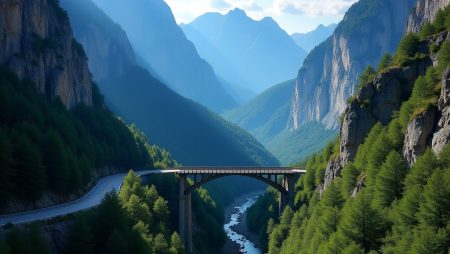
The Tara River runs through a canyon that rivals the Grand Canyon in depth. White-water rafting trips leave from Splavište, about 20 minutes from Žabljak. The rapids are class 3–4, the water is drinkable, and the 18 km route passes under the Đurđevića Tara Bridge — a 150-meter-high concrete arch from 1940, famous from Yugoslav war films and still one of the country’s most photographed structures.
5. Ostrog Monastery — The Miracle in the Rock
Ostrog Monastery is carved into a near-vertical cliff face above the Zeta Valley, about 45 km northwest of Podgorica. Founded in the 17th century by St. Basil of Ostrog (Sveti Vasilije Ostroški), it’s the most important pilgrimage site in the Orthodox world after Mount Athos and Jerusalem — and the only one built into a cliff.
The upper monastery houses the relics of St. Basil, which the faithful believe have healing powers. Pilgrims walk 3 km uphill from the lower monastery, many barefoot. You can drive the narrow road to the upper monastery — it’s steep and single-lane in places, so go slow and be prepared to reverse for oncoming cars. Park in the small lot near the entrance. The dress code is enforced: shoulders and knees covered. Bring a scarf if you’re not dressed for it.
The monastery itself is modest — whitewashed walls, small chapels, mosaics — but the setting is extraordinary. The building appears to grow out of the rock overhang, and from the terraces you look down several hundred meters to the valley floor. Go at dawn if you can. The light hits the cliff and the monastery glows.
6. The Coast South of Budva — Petrovac, Bar, and Ulcinj
Most visitors to the Montenegrin coast stop at Budva and Kotor. The stretch south is less hyped and better for it.
Petrovac: a crescent beach, Venetian fortress (Kaštel Lastva) on a rock, good restaurants. Reževići Monastery between Budva and Petrovac sits right on the coastal road — a 15th-century complex with frescoes, usually empty. The monks sell olive oil and rakija.
Stari Bar (Old Bar): do not confuse this with the modern port city below. Stari Bar is a ruined hilltop town — abandoned after an 1878 gunpowder explosion, now an archaeological site sprawling across a rocky ridge. Ottoman aqueducts, crumbling churches, a clock tower, stone houses with trees growing through them. The site covers 4 hectares. It’s one of Montenegro’s best attractions and gets a fraction of the visitors that Kotor Old Town does.
Ulcinj: the southernmost town, majority Albanian, with a cliff-top Old Town and a 12 km stretch of sand called Velika Plaža (Long Beach). The water here is the warmest on the coast and the beach is famous for kitesurfing. The Old Town has a small museum about the pirate era — Ulcinj was a notorious pirate base in the Ottoman period — and a purported grave of Cervantes (the claim is dubious, but the story is good).
7. The Prokletije (Accursed Mountains)
Montenegro’s wildest mountain range runs along the Albanian and Kosovo borders. The Prokletije are the southernmost part of the Dinaric Alps, and they’re rugged in a way that Durmitor — developed and marked — is not. This is where you go if you want real solitude.
Access is from Plav and Gusinje, about 2.5 hours east of Podgorica. From Gusinje: the hike to the Ali Pasha Springs (Alipašini izvori) is an easy 30-minute walk to where the river bursts out of the mountainside. The Grlja Waterfall is another short hike near the village of Vusanje. For serious trekking: the Peaks of the Balkans trail crosses through here, and Volušnica (also called Ropojana Valley) is one of the most dramatic glacial valleys in the Dinarides.
The roads to Plav and Gusinje are paved throughout. A standard car handles them — no 4WD needed. But fuel stations are sparse once you leave the Podgorica valley. Fill up before heading east.
8. The Luštica Peninsula — Montenegro’s Best-Kept Coastal Secret
Between the Bay of Kotor and the open Adriatic, the Luštica peninsula is an outlier. Olive groves, stone villages, hidden coves, and Austro-Hungarian forts from the 19th century. The roads are narrow — some sections unpaved — and that’s exactly what keeps the development at bay.
Rose: a fishing village on the bay side, quiet and pretty. Žanjice Beach: the main beach, pebble, clear water, a couple of restaurants. Mirište: next to Žanjice, quieter. Arza Beach: at the far tip, near Fort Arza, often deserted — the road is rough for the last kilometer. Blue Cave (Plava Špilja): boat access only from Žanjice or Herceg Novi. The sun through the underwater opening turns the water electric blue.
Luštica is a half-day trip from Kotor or Budva. Don’t rush it.
How to Organize a Montenegro Road Trip
Book your rental car in Montenegro before you travel. Use a comparison platform to compare suppliers — rates can vary by hundreds of euros between agencies for the same vehicle class, especially in peak season. No hidden fees — your booking quote is what you pay, assuming standard fuel and return conditions.
Where to pick up: Tivat Airport if your trip is coast-heavy. Podgorica Airport if you’re mixing coast and mountains. Both are small, efficient airports with on-site rental desks and cars parked steps from the terminal.
Sample 10-day itinerary: Days 1–2, Bay of Kotor (base in Kotor or Perast). Day 3, Lovćen serpentine and Cetinje. Day 4, Budva coast to Petrovac/Stari Bar. Day 5, Lake Skadar and Crmnica wine. Day 6, drive north through Morača Canyon to Žabljak. Days 7–8, Durmitor and Tara Canyon. Day 9, Ostrog Monastery and return toward the coast. Day 10, Luštica peninsula and departure.
Small car. Air conditioning. Full-to-full fuel. Download offline maps. Bring a swimsuit, hiking boots, and an appetite. Montenegro is compact, but it’s dense — every valley has a monastery, every bay has a beach, every mountain road has a view that’ll make you pull over. The car is what connects them. Go drive.