Discover the Best of Montenegro with a Rental Car
Discover the Best of Montenegro with a Rental Car
Montenegro packs more variety into 13,812 square kilometers than most countries manage in ten times the space. In a single day you can swim in the Adriatic, drive a canyon road that rivals anything in the Alps, and eat lamb under a vine canopy at 1,400 meters. The catch: none of it is connected by public transport that runs on a schedule you’d want to rely on.
This is the reality of travel in Montenegro. The country rewards people who drive. You can do the coastal highlights by bus, but you’ll miss the monasteries in the cliffs, the mountain lakes, the villages where the road ends at a konoba with no sign. A rental car in Montenegro is what separates a beach holiday from an actual trip. Here’s what you should see with one.
The Bay of Kotor: Do the Whole Ring
Everyone goes to Kotor Old Town and calls it done. They walk the alleys, maybe climb the walls, eat overpriced calamari on a square, and leave. That’s maybe 20% of what the bay offers.
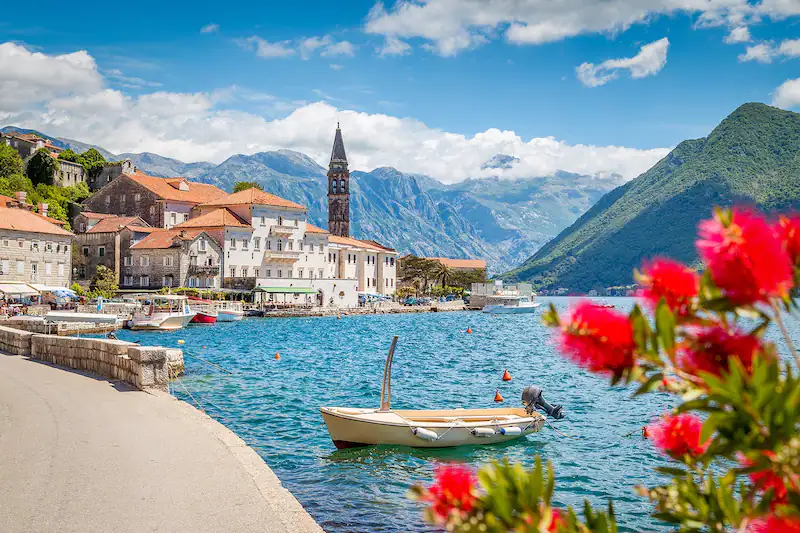
The full Bay of Kotor ring — 40 km door to door — takes you through Perast (baroque palaces, the island church of Our Lady of the Rocks, black risotto at Konoba Školji), Risan (Roman mosaics from the 2nd century, no crowds), Herceg Novi (a lived-in town with fortress stairs and a monastery from 1030), and back across the Verige ferry (€4.50, saves 20 minutes, best photo angle on Perast).
Book a rent a car Kotor pickup and use it as your bay exploration vehicle. Parking in Kotor Old Town doesn’t exist — use the Kamelija lot and walk in. The car is for the bay loop, the serpentine to Lovćen, and the spontaneous pull-offs that every kilometer of this shoreline offers.
The Lovćen Serpentine: Best Drive in the Country
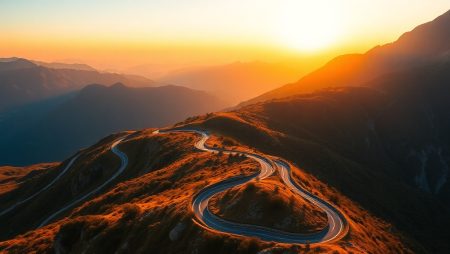
From Kotor, the P1 road climbs 25 numbered switchbacks up the mountainside. It’s an Austro-Hungarian engineering feat from 1879. At turn 22 there’s a viewpoint where the entire Bay of Kotor unfolds below — the red roofs, the cruise ships looking like toys, the water stretching toward Herceg Novi. On a clear day: Italy on the horizon.
At the top, Lovćen National Park and Njegoš’s Mausoleum — climb 461 steps to the tomb of Montenegro’s greatest poet and prince-bishop, standing at 1,660 meters with a 360-degree mountain panorama. Then continue to Cetinje, the old royal capital, with its monastery (claiming the right hand of John the Baptist) and the former European embassies now serving as museums. A rental car Montenegro turns this into a single, unforgettable day.
Lake Skadar: Wine, Pelicans, and Smoked Carp
The largest lake in the Balkans straddles the Montenegro-Albania border. The Montenegrin side is a national park, and the best access is from Virpazar — a stone village on a bridge over a reed-lined channel. Boat trips (€15–20/hour) take you through lily fields to see Dalmatian pelicans and pygmy cormorants. The old prison island of Grmožur (Montenegro’s Alcatraz) sits in the lake — boatmen will tell you stories about the one prisoner who escaped by swimming.
After the boat: the Crmnica wine region. Small family wineries line the road from Virpazar south toward Godinje and the Albanian border. Garni Winery and Mašanović are reliable stops. They’ll pour Vranac (the local red) and Krstač (a white variety) for free and sell bottles for €5–8. Buy a bottle. It’s better than anything you’ll find in a coastal restaurant for €25.
This area is barely 30 minutes from a car hire Podgorica airport pickup. You can do the lake and the wine in a half-day before heading to the coast.
Durmitor and the North: Europe’s Deepest Canyon
The road north from Podgorica through the Morača Canyon is one of the best drives in the Balkans — turquoise water, vertical limestone, tunnels, the 13th-century monastery. At Kolašin (950 meters), you’re in mountain country. Another hour to Žabljak, the base for Durmitor National Park.
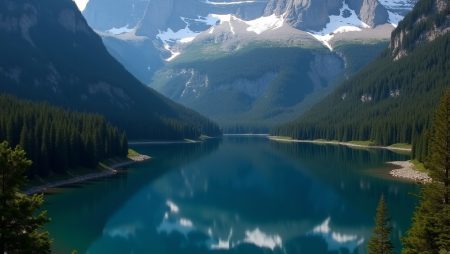
Durmitor is a UNESCO site with 48 peaks above 2,000 meters, 18 glacial lakes, and the Tara River Canyon — the deepest canyon in Europe at 1,300 meters. Rafting the Tara is a full-day trip (book in Žabljak). Black Lake (Crno Jezero) is the easy walk — a 3.6 km loop around two connected glacial lakes, all pine forest and mountain reflections.
The drive from the coast to Žabljak takes about 3.5 hours from Budva or Kotor. It’s far enough that most visitors skip it. That’s their loss. The north of Montenegro in summer — wildflower meadows, empty trails, temperatures 10°C cooler than the coast — is the country at its best.
Ostrog Monastery: Carved Into a Cliff
The Ostrog Monastery sits in a vertical cliff face above the Zeta Valley, about an hour from Podgorica and two hours from the coast. It’s the most important Orthodox pilgrimage site in Montenegro — the body of St. Basil of Ostrog (Sveti Vasilije) has been interred in the upper monastery since 1671, and the faithful believe it has healing powers. Pilgrims walk barefoot from the lower monastery to the upper one, about 3 km uphill. You can drive.
Even if you’re not religious: the setting is staggering — white monastery buildings fused into a rock overhang hundreds of meters up, the plain stretching below, the mountains beyond. Go early. By 10 AM the tour buses arrive and the narrow road up clogs with coaches attempting moves that geometry doesn’t support. Dress code: covered shoulders and knees.
The Coast Beyond Budva and Kotor
The stretch from Budva south to Ulcinj is less visited than the Bay of Kotor, and that’s exactly the appeal.
Budva gets the crowds. The Old Town is worth a morning. Sveti Stefan — the 15th-century island-village-turned-luxury-hotel — is the postcard shot from the road above.
Petrovac: a crescent beach, a Venetian fortress, quieter than Budva. Bar: skip the modern port city, drive up to Stari Bar — a ruined hilltop town abandoned after an 1878 explosion, now a sprawling archaeological site with Ottoman aqueducts and crumbling stone houses. It’s one of Montenegro’s most underrated attractions.
Ulcinj: the southernmost town, with a strong Albanian influence, a walled Old Town on a cliff, and the 12 km Velika Plaža (Long Beach) — Montenegro’s longest stretch of sand, famous for kitesurfing. The water gets noticeably warmer here.
The Luštica Peninsula
Between the Bay of Kotor and the open Adriatic, Luštica is a limestone peninsula of olive groves, stone villages, and hidden coves. The roads are narrow and sometimes unpaved. Most tourists never go here. With a rental car in Montenegro, you can.
Rose: a tiny fishing village on the bay side, with a pebble beach and a couple of konobas. Žanjice Beach: the most popular on the peninsula, a sheltered pebble cove with clear water. Mirište: quieter, next to Žanjice. Arza Beach: at the tip, near an old Austro-Hungarian fort, often empty even in August. The road to Arza is rough — drive slowly.
The Blue Cave (Plava Špilja) is a sea cave near the tip of Luštica accessible only by boat. Boat trips leave from Žanjice, Herceg Novi, and Kotor. The water inside glows an electric blue when the sun hits the opening. Worth the €5–10.
Planning Your Route
Montenegro is small. Distances aren’t. A drive from Ulcinj in the south to Žabljak in the north is 230 km and takes 4–5 hours because of mountain roads. Plan accordingly. Don’t try to do the coast and Durmitor in the same day.
A solid one-week plan with a rental car Montenegro: fly into Tivat (coastal) or Podgorica (central). Day 1: arrival, settle in, coastal town. Day 2: Bay of Kotor loop. Day 3: Lovćen serpentine and Cetinje. Day 4: Lake Skadar and wine country. Day 5: drive north to Durmitor via Morača Canyon. Day 6: Durmitor (Black Lake, Tara rafting). Day 7: Ostrog Monastery, return via Nikšić, drop off the car.
Book your car before you fly. Use a platform to compare suppliers — rates vary dramatically by season and vehicle type. No hidden fees. What you see is what you pay. Small car, air conditioning, full-to-full fuel policy. Everything else is optional. Montenegro is ready. Just drive.