Driving from Montenegro to Albania | Border Guide | Rental Cars Montenegro
The Route from Montenegro into Albania: What You Need to Know
Driving from Montenegro to Albania is one of the most direct ways to move between two of the Balkans’ most distinct countries. The border is short but busy, and the roads that connect them cut through some of the most dramatic mountain scenery in southern Europe. Whether you are based in Podgorica, Kotor, or Budva, the drive into Albania can be done in a single day, but it pays to know the practical details before you set off. Border formalities, road conditions, and insurance rules are all different from what you might expect elsewhere in Europe.
The most used crossing is at the Bozaj-Tuzi border point, just south of Podgorica. This is the natural route if you are driving from Montenegro’s capital toward Shkodër, Tirana, or the Albanian coast. Another option is the crossing near Vermosh in the far north, but that is remote, seasonal, and not suitable for casual travel. For almost every visitor, Bozaj-Tuzi is the sensible choice. The border sits on the main E851 and SH1 road corridor, which links Podgorica to Shkodër in roughly forty-five minutes under normal traffic.
Before you even reach the border, you need to confirm that your rental car agreement allows cross-border travel. Many visitors assume that because Montenegro and Albania are neighbours, rental cars move freely between them. That is not the case. Most rental agreements in Montenegro restrict travel to neighbouring EU countries or the Western Balkans, and Albania is sometimes excluded because it is outside the EU green card zone. You must ask explicitly when you pick up the car. If cross-border permission is granted, the rental company will provide a green card insurance document that includes Albania. Without it, you cannot legally drive across.
The drive from Podgorica to the Bozaj-Tuzi border takes about twenty minutes on a good road that passes through the town of Tuzi, which has a large Albanian-speaking population. You will see road signs in both Cyrillic and Latin script as you approach the border. Keep your speed down in Tuzi because local traffic includes pedestrians, cyclists, and slow-moving agricultural vehicles. The last few kilometres before the border have several speed cameras, and fines are issued on the spot.
Border Crossing Procedures and Paperwork
At the Bozaj-Tuzi crossing, the process is straightforward but can be slow during July and August when tourist traffic peaks. You will pass through Montenegrin exit control first. Have your passport ready, along with the vehicle registration document and the rental agreement. The border guard may ask where you are going and for how long. Keep your answers simple and consistent with any documentation you carry. After Montenegrin exit, you drive a short distance to Albanian entry control.
Albanian entry for most European and North American passport holders is visa-free for stays up to ninety days. You will receive a passport stamp, and the officer may ask to see proof of onward travel or accommodation. The green card insurance document is critical here. Albanian border police sometimes check that your vehicle is insured for Albania specifically, not just for Montenegro. If your green card does not list Albania, you will be turned back or forced to buy temporary border insurance on the spot, which is expensive and time-consuming.
There is no vignette or toll sticker required to enter Albania, but you will need to buy Albanian highway tolls later if you use the main Tirana–Durrës motorway. These are paid in cash at toll booths. The currency in Albania is the lek, but euros are accepted at many border-adjacent businesses and toll stations. Still, it is wise to carry some Albanian lek in small denominations for rural fuel stations or minor road tolls.
Queue times at Bozaj-Tuzi vary dramatically. On a quiet Tuesday morning, you might clear both sides in under fifteen minutes. On a Friday afternoon in July, the wait can stretch past an hour. Coaches and commercial lorries slow the process, and during peak season the Albanian side sometimes opens only two lanes out of four. Patience is essential, and you should never attempt to cut the queue or argue with border staff. Both Montenegrin and Albanian border guards are professional, but they have little tolerance for travellers who try to bypass procedure.
What to Expect from Albanian Roads
Once you clear the border and head south toward Shkodër, the road quality changes noticeably. Montenegrin roads are generally well surfaced and clearly marked. Albanian roads have improved dramatically over the past decade, but you will still encounter uneven surfaces, unmarked speed bumps near villages, and occasional potholes after winter rains. The main SH1 highway from the border to Shkodër and on to Tirana is mostly in good condition, but side roads leading toward the Albanian Alps or the coast can be narrow and winding.
Traffic behaviour in Albania is more chaotic than in Montenegro. Overtaking on bends is common, and local drivers use their horns liberally. Stay alert, drive defensively, and expect the unexpected. Livestock on the road is not unusual in rural areas, especially early in the morning or at dusk. Speed limits are posted but not always respected, so keep to the limit for your own safety and because police checkpoints are frequent on the main routes.
One practical point: Albanian fuel stations are plentiful on the main highways but can be sparse in mountainous regions. Fill up before you leave Shkodër or Tirana if you are heading into the countryside. Diesel and unleaded petrol are both available, and most stations accept cash or card. Always check that your rental car is fuelled before you leave Montenegro, because fuel prices are slightly lower there than in Albania.
Road signage in Albania uses Latin script, which is easy for most European visitors to read. Distances are marked in kilometres, and major destinations are signposted in both Albanian and English on the main highways. Side roads may have older signs that are weathered or missing, so having an offline map downloaded before you leave Montenegro is a sensible backup.
Driving from Kotor or Budva to Albania
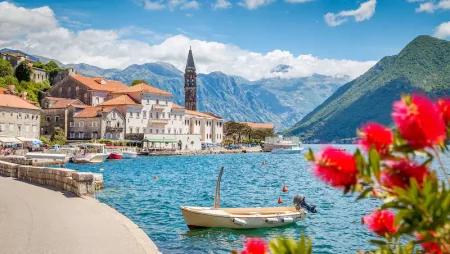
If you are staying on Montenegro’s coast, in Kotor, Budva, or Bar, the drive to Albania adds some distance but is still very manageable. From Kotor to the Bozaj-Tuzi border is roughly ninety minutes via the coastal road and then inland toward Podgorica. The coastal drive itself is one of the best in the region, hugging the Bay of Kotor before climbing over the Lovćen mountain pass. After Podgorica, you join the main road south to the border.
Many travellers make this drive as a day trip, crossing into Albania to visit Shkodër and its historic castle, then returning to Montenegro in the evening. That is entirely feasible if you start early. Shkodër is only about twenty minutes from the border, and its castle, cathedral, and lakeside cafes make it worth the trip. If you want to push further to Tirana, add another two hours of driving each way, so plan for a longer day or consider overnighting in Albania.
Alternatively, some visitors drive from Montenegro into Albania as the next leg of a longer Balkan road trip. Starting in Dubrovnik, picking up a rental car in Kotor or Podgorica, and then continuing south through Albania toward Greece is a popular itinerary. In that case, make sure your rental agreement covers all the countries you plan to visit, because re-entering Montenegro from Albania later may require additional paperwork depending on your provider.
From Budva, the drive to Albania takes about an hour and fifteen minutes to the border. The route follows the Adriatic motorway south to Bar, then turns inland through the Sozina tunnel toward Podgorica. The tunnel is well lit and maintained, but it has a toll of around €2.50. After Podgorica, the road to Tuzi and the border is flat and fast. If you are staying in the Ulcinj area, which is already close to the Albanian frontier, the border is barely thirty minutes away, making a day trip to Shkodër almost effortless.
Insurance, Breakdown Cover, and Emergency Contacts
Insurance is the area where most travellers get caught out when driving from Montenegro to Albania. The standard collision damage waiver on your rental car may not cover incidents that occur outside Montenegro. You need to confirm with the rental desk that your policy extends to Albania, and that the green card explicitly lists Albania as a covered territory. If the provider cannot confirm this, do not cross the border. The risk is not worth the saving.
Breakdown cover is another detail to check. Montenegrin roadside assistance contracts do not always extend into Albania. Ask the rental company for an emergency contact number that works in Albania, or find out if they have a partner network there. In practice, major routes are well served by local garages, but in remote mountain areas you may face a long wait if something goes wrong. Carry water, snacks, and a charged phone, especially if you are driving the northern mountain passes.
Emergency numbers are simple: 112 works across both Montenegro and Albania for police, medical, or fire emergencies. Save this in your phone before you travel. It is also worth downloading offline maps for Albania, because mobile data roaming can be patchy in the mountains even with a European roaming plan.
Another insurance point: personal accident cover. Some rental policies include this for the driver and passengers, but only within Montenegro. If you are driving into Albania, check whether your travel insurance policy covers medical evacuation or hospital costs across the border. Albania has modern hospitals in Tirana and Shkodër, but remote areas have limited facilities. If you are planning to explore the Albanian Alps or the southern coast beyond Sarandë, make sure your health coverage is adequate for the activities you have planned.
Costs, Tolls, and Money-Saving Advice
Driving from Montenegro to Albania is not expensive, but costs add up if you are unprepared. The border itself has no fee, but the tolls inside Albania are paid in cash. The main Tirana–Durrës motorway charges a small toll, usually under €2, but you need local currency or euros in notes. Credit cards are rarely accepted at Albanian toll booths. Parking in Shkodër or Tirana is cheap by European standards, often €1-2 per day in supervised lots, but street parking can be chaotic and you risk fines if you park illegally.
If you are renting a car specifically for this cross-border journey, compare providers carefully. Some Montenegrin rental companies advertise low daily rates but charge steep cross-border surcharges that are only revealed at pick-up. A transparent provider will quote the full price upfront with no hidden fees. Ask the direct question: “Is Albania included in the green card and the rental insurance?” If the answer is vague, walk away and find a provider that gives a clear yes.
Returning the car in Montenegro after a trip to Albania is usually straightforward, provided you have kept all the paperwork and the car is in the same condition. Do not forget to refuel before return, because rental companies charge premium rates for missing fuel. If your route took you onto dirt roads, wash the car before drop-off to avoid cleaning charges.
One money-saving tip specific to this route: fill your tank in Podgorica before crossing, because Montenegrin fuel is cheaper than Albanian fuel by roughly €0.10 per litre. Over a full tank, that difference adds up. Likewise, if you are buying snacks or water for the journey, do it in Montenegro. Border-area shops on the Albanian side charge tourist prices.
Practical Tips for a Smooth Cross-Border Drive
Start early. Border queues are shortest between 08:00 and 10:00. By midday in summer, the Bozaj-Tuzi crossing can back up for an hour or more with coaches, lorries, and tourist cars. Have your documents within arm’s reach: passport, driving licence, rental agreement, vehicle registration, and green card. Do not bury them in luggage. Dress comfortably, because you may need to step out of the car for a brief inspection, especially if the guards are conducting spot checks.
Keep some snacks and water in the car, because border waits can stretch longer than expected, and the shops near the crossing are basic. If you are travelling with children, bring entertainment for potential delays. The border area is safe but lacks facilities, so patience is essential.
Consider your vehicle choice carefully. A compact car is fine for the main roads to Shkodër and Tirana, but if you plan to explore the Albanian Alps or drive the rougher coastal tracks south of Vlorë, a vehicle with higher ground clearance is safer. Some of the most beautiful parts of Albania are accessed by gravel or dirt roads that are hard on low-slung city cars. Ask your rental provider about the suitability of your chosen vehicle for the specific route you have in mind.
Finally, enjoy the drive. The route from Montenegro into Albania takes you from the Adriatic coastline up over mountain ridges and down toward Lake Shkodër, one of the largest lakes in southern Europe. The views are worth the paperwork. With the right preparation, driving from Montenegro to Albania is a straightforward and rewarding way to see two Balkan countries in a single trip. Just make sure your rental agreement is in order, your insurance is valid, and your tank is full. The rest is simply a matter of following the road south.
Ready to book? Visit our homepage for the best hire car deals.